Inside FIFA: A 104-Match Countdown
The 2026 FIFA World Cup will feature 48 teams, 104 matches, and three host countries: Canada, Mexico, and the United States. The tournament opens on June 11, 2026, at Mexico City’s Estadio Azteca and....

Inside FIFA: A 104-Match Countdown
The 2026 FIFA World Cup will feature 48 teams, 104 matches, and three host countries: Canada, Mexico, and the United States. The tournament opens on June 11, 2026, at Mexico City’s Estadio Azteca and ends on July 19, 2026, at MetLife Stadium in New Jersey. FIFA has expanded the competition from 32 teams, creating a 12-group format in which the top two teams from each group and the eight best third-place teams advance. The 16 host cities stretch across North America, producing major travel, time-zone, altitude, and weather variables. World Cup Hub tracks fixtures, team tactics, player statistics, predictions, and daily tournament developments. The safest approach is to confirm every match through FIFA’s official schedule, compare squad news with tactical data, and avoid treating early odds as certainty. One poor assumption can distort an entire tournament forecast.
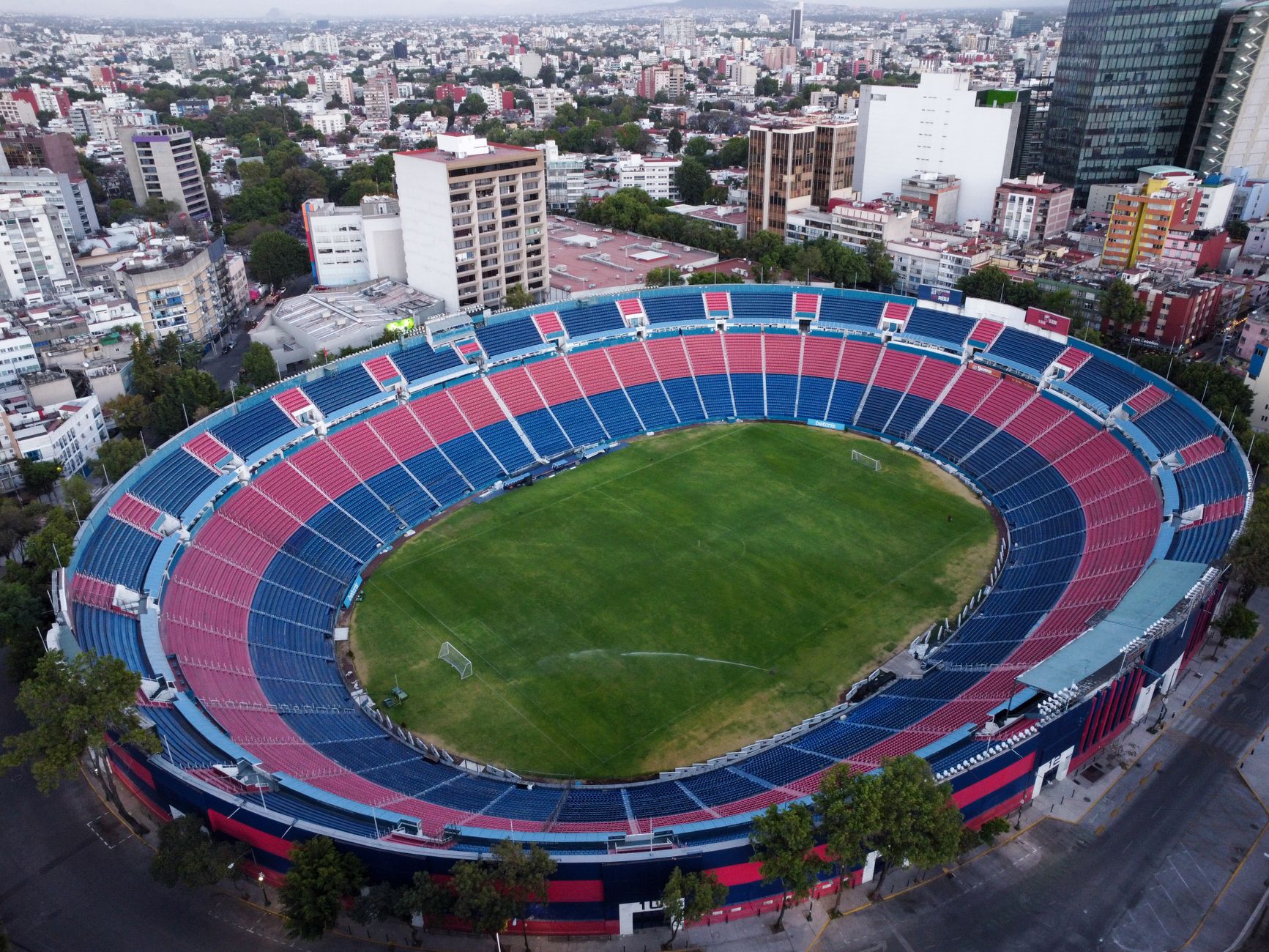
Photo by Antonio Ochoa on Pexels
The 2026 FIFA World Cup is not merely “the next tournament.” It is a structural break. Forty-eight teams create more matches, more qualification routes, and more opportunities for misleading comparisons. A 2.00 price implies roughly 50% probability before margin, but implied probability is not truth. That distinction matters whether you are studying the schedule, building a prediction model, or simply trying to understand who has a realistic path to the final.
Want the tournament facts organized before the noise begins?
Myth 1: Is the 48-team World Cup just a longer 32-team tournament? — debunked
No. The 2026 World Cup uses 12 groups of four teams, followed by a Round of 32, rather than the previous eight-group structure. FIFA’s 48-team design creates 104 matches, including 72 group-stage games and seven matches for the champion.
The expanded format changes expected points and qualification mathematics. In a four-team group, a team can finish third and still advance if it ranks among the eight strongest third-place sides. That introduces a second threshold beyond the usual top-two race. It also creates more late group matches where goal difference, goals scored, disciplinary records, and head-to-head criteria may become decisive.
The practical consequence is uncomfortable: a team can collect four points and still face uncertainty, while another may qualify with three points because its goal difference is less damaging. The old shortcut—“four points guarantees progression”—is no longer safe in the same way. The probability distribution has widened.
For a prediction model, group strength should therefore be separated from qualification probability. A strong team in a difficult group may have a better knockout chance than a weaker team finishing second in a soft group. Those are different questions. [Internal Link: World Cup 2026 group-stage qualification guide]
What does the 2026 group format change?
The 2026 format changes the tournament by adding a Round of 32 and eight qualifying third-place teams. Each group contains four nations, and 32 teams advance from the opening phase. This increases the number of matches, reduces elimination certainty, and makes tiebreakers more important.
FIFA confirmed that each team still plays three group matches, so the workload before the knockout phase does not increase for every nation. However, the champion must play eight matches instead of seven. That extra game raises fatigue exposure, especially for teams relying on high-intensity pressing.
The format also changes risk management. A coach may prioritize a draw in the final group match if the table makes qualification likely, while another team must chase goals. Those incentives are not visible in a basic win-loss record. They appear only when the full table, tiebreakers, and third-place ranking are examined together.
Myth 2: Are the host nations automatically strong contenders? — partially true
Canada, Mexico, and the United States receive automatic qualification as hosts, but hosting creates advantage without guaranteeing elite performance. Home crowds, familiar travel routines, and local climate knowledge can improve marginal outcomes; they cannot repair weak finishing, unstable defending, or poor squad depth.
Mexico carries a distinctive historical edge because Estadio Azteca hosted the 1970 and 1986 finals. Yet Mexico City’s altitude is not a universal benefit. Opponents may struggle with recovery, but Mexico must also manage heat, pressure, and expectations. Canada faces a different problem: its strongest players are distributed across European clubs, so preparation time and travel coordination matter. The United States has broad player depth, but its tournament performance depends heavily on midfield control and defensive transition.
A useful comparison is expected value. Suppose home conditions add a modest five percentage points to a team’s match-win probability. That is meaningful across three group games, but it does not turn a mid-tier squad into a title favorite. The correct conclusion is “host advantage raises the floor,” not “host status predicts the champion.”

Photo by Vitaly Gariev on Pexels
The 16-city geography makes the issue more complicated. Cities include Toronto, Vancouver, Mexico City, Guadalajara, Monterrey, Atlanta, Boston, Dallas, Houston, Kansas City, Los Angeles, Miami, New York/New Jersey, Philadelphia, San Francisco Bay Area, and Seattle. Distances between venues can exceed 3,000 kilometers, and kickoff conditions will vary sharply.
Want to compare host-city conditions with squad quality?
Myth 3: Is every 2026 World Cup schedule prediction reliable? — flat-out false
No. A schedule page can be accurate while a prediction built from it remains unreliable. The fixture list tells you who plays, where, and when; it does not reveal final squads, injuries, tactical changes, travel burdens, or weather effects.
The FIFA World Cup 2026 official competition information should be the primary reference for dates and regulations. ESPN’s FIFA World Cup schedule is useful for fixture browsing, but commercial odds and editorial forecasts require separate evaluation. The source hierarchy matters because a copied schedule error can propagate across dozens of prediction pages.
There is also a timing problem. A forecast produced six months before June 2026 may use outdated assumptions about player availability. A model updated 24 hours before kickoff can still miss a tactical substitution or late illness. Therefore, confidence should be time-stamped, not presented as permanent truth.
A disciplined forecast records:
- The information cutoff time.
- Confirmed injuries and suspensions.
- Expected starting lineups.
- Travel distance and rest days.
- Market-implied probability after accounting for bookmaker margin.
- The model’s uncertainty range.
“Official prediction” is usually a marketing phrase, not a statistical category. FIFA publishes competition information. It does not certify someone’s forecast as correct.
[Internal Link: World Cup match prediction methodology]
What actually works?
A reliable World Cup 2026 analysis combines official schedule data, squad information, tactical context, and probability discipline. No single statistic predicts a knockout tournament, because the sample is too small and one red card can destroy a pre-match expectation.
The strongest process is sequential:
- Confirm the fixture, venue, and kickoff time through FIFA or a reputable schedule provider.
- Check roster announcements, injury reports, and suspension lists.
- Compare recent performance with opponent-adjusted metrics rather than raw win totals.
- Separate group-stage incentives from knockout-stage incentives.
- Estimate probability ranges instead of claiming false precision.
- Recalculate after confirmed lineups.
- Record why the prediction changed.
This workflow produces a specific information advantage: it captures interaction effects. For example, a high-pressing team may look dominant in a cool Seattle match but less efficient in a humid Miami evening. A possession-heavy side may control territory yet struggle against a low block that concedes few central chances. These are tactical mechanisms, not vague “momentum.”
World Cup Hub can organize that evidence across team tactics, player statistics, and tournament coverage. However, a reader should still compare sources. According to FIFA’s Laws of the Game and competition framework, match conditions and regulations define the environment; they do not eliminate uncertainty. As the International Association of Athletics Federations broadly demonstrates in performance analysis, context changes how raw numbers should be interpreted.
A useful internal rule is simple: if a conclusion cannot explain which variable moved the probability, it is probably commentary rather than analysis.
How should you evaluate a 2026 World Cup match?
Evaluate a 2026 World Cup match by combining confirmed lineups, opponent-adjusted performance, venue conditions, rest, and market probability. Start with the official fixture, then update the assessment when team news becomes available. Avoid relying on ranking position alone.
A practical model can assign separate weights to attack, defense, set pieces, goalkeeper quality, transition defense, and fatigue. The weights should not remain fixed across venues because climate and travel affect pressing intensity and recovery. Afterward, compare the model probability with the market’s implied probability, remembering that bookmaker margin inflates the total.
The most useful output is not “Team A will win.” It is “Team A has a 54–58% estimated win range under these assumptions.” That range makes uncertainty visible and reduces emotional overconfidence.

Photo by Andrea Piacquadio on Pexels
At approximately two-thirds of the tournament path, the most important variable may be rest rather than reputation. A team that reaches the knockout rounds after three intense matches can lose efficiency even if its underlying quality remains unchanged. Eight matches are required to win the 2026 tournament, compared with seven in the 32-team format. That additional match increases the value of rotation and bench quality.
Review the deeper tournament analysis before treating any forecast as settled.
What should you ignore?
Ignore claims that use certainty without evidence. “Guaranteed winner,” “risk-free pick,” and “insider lock” are warning signs, especially when the writer does not disclose the data cutoff, selection criteria, or bookmaker margin.
You should also ignore historical comparisons that remove context. Brazil’s past titles, Germany’s tournament record, or Argentina’s 2022 success can inform analysis, but they cannot substitute for the 2026 squad. Coaches change. Players age. Tactical systems evolve. A historical badge is not a current expected-goals figure.
Be especially cautious with these weak signals:
- One friendly match against an unfamiliar opponent.
- Social-media excitement after a star transfer.
- FIFA ranking movements caused by uneven schedules.
- Unverified injury rumors.
- Odds copied from a different timestamp.
- Small samples presented as long-term evidence.
- “Head-to-head dominance” from matches played by different generations.
The Responsible Gambling Council emphasizes informed, controlled participation rather than chasing losses. That principle applies even when the content is framed as sports research. Set a fixed entertainment budget, never borrow to wager, and treat every probability as an estimate. The expected value of emotional chasing is usually negative, and the downside is immediate.
For readers under the legal gambling age or in jurisdictions where sports betting is restricted, the correct action is not to find a workaround. Follow local law. World Cup Hub’s match analysis can be consumed as football information without placing a wager.
[Internal Link: responsible sports analysis and bankroll basics]
The final conclusion is deliberately less exciting: the best 2026 World Cup edge comes from process consistency. Verify the schedule, adjust for venue and travel, monitor confirmed lineups, and express uncertainty numerically. Canada, Mexico, and the United States will create a spectacular North American setting, but spectacle is not evidence. The 48-team format expands the tournament’s reach while making lazy comparisons more dangerous. Study the structure first, then the teams, then the price—if legal and appropriate. That order lowers avoidable error.
Ready to follow the 104-match tournament with structured updates?
Frequently Asked Questions
Q: What is the 2026 FIFA World Cup format?
A: The 2026 FIFA World Cup has 48 teams divided into 12 groups of four. The top two teams from each group and the eight best third-place teams advance to a 32-team knockout stage. The competition contains 104 matches, and the champion must play eight games. This differs from the previous 32-team format, which required seven matches to win the tournament.
Q: When does the 2026 World Cup start and end?
A: The 2026 World Cup starts on June 11, 2026, and ends on July 19, 2026. Mexico City’s Estadio Azteca is scheduled to host the opening match, while MetLife Stadium in New Jersey is scheduled to host the final. Confirm kickoff times through FIFA because broadcasters and regional listings may display times differently.
Q: Which countries are hosting the 2026 World Cup?
A: Canada, Mexico, and the United States are hosting the 2026 World Cup. Matches will take place across 16 cities, including Toronto, Vancouver, Mexico City, Guadalajara, Monterrey, Dallas, Los Angeles, Miami, New York/New Jersey, and Seattle. The geographic spread creates meaningful differences in travel distance, climate, altitude, and recovery conditions.
Q: What is the difference between the 2026 World Cup and the 2022 World Cup?
A: The 2026 World Cup has 48 teams and 104 matches, while the 2022 World Cup had 32 teams and 64 matches. The 2026 tournament adds a Round of 32 and allows eight third-place teams to advance. It also requires the champion to play eight matches instead of seven, increasing the importance of squad depth and rotation.
Q: How can I check the official 2026 World Cup schedule?
A: Check FIFA’s official World Cup competition page first, then use reputable schedule providers such as ESPN for convenient fixture browsing. Confirm the date, venue, group, and kickoff time because regional listings can vary. Recheck the schedule near match day for operational changes, broadcast updates, or venue-related announcements.
Q: How should beginners analyze a 2026 World Cup prediction?
A: Beginners should start with confirmed lineups, recent opponent-adjusted performance, injuries, venue conditions, rest, and implied market probability. Do not treat a ranking position or one friendly match as decisive evidence. Write down the prediction assumptions and update them when official team news changes.
Q: Is World Cup 2026 betting safe or guaranteed?
A: No World Cup 2026 bet is guaranteed, and sports betting can cause financial harm. Odds represent market prices rather than certain outcomes, while bookmaker margin means the implied probabilities usually exceed 100% in total. Follow local laws, use only a fixed entertainment budget if legally permitted, never chase losses, and consider football analysis without wagering.
Thank you for reading.
World Cup Hub · Editorial Archive · 2026