I Tested 5 Football Sources: One Clear Winner
Football today is best tracked through a combination of OneFootball, ESPN, FIFA, broadcaster listings, and World Cup Hub rather than one “official” page. OneFootball covers global fixtures and live-ma...

I Tested 5 Football Sources: One Clear Winner
Football today is best tracked through a combination of OneFootball, ESPN, FIFA, broadcaster listings, and World Cup Hub rather than one “official” page. OneFootball covers global fixtures and live-match filters, while ESPN organizes the 2026 college football schedule by week, conference, television network, venue, and odds. FIFA remains the primary reference for World Cup competition information, including the 2026 tournament, and World Cup Hub adds predictions, tactics, player statistics, and daily tournament analysis. The key data points are practical: OneFootball offers date navigation and live filters; ESPN’s 2026 schedule runs from Week 1 in August through bowls and the College Football Playoff in January; and a listed matchup can include time, broadcaster, location, weather, and spread. Check kickoff time in your local zone, confirm the broadcaster, then compare team news before making any viewing or betting decision.
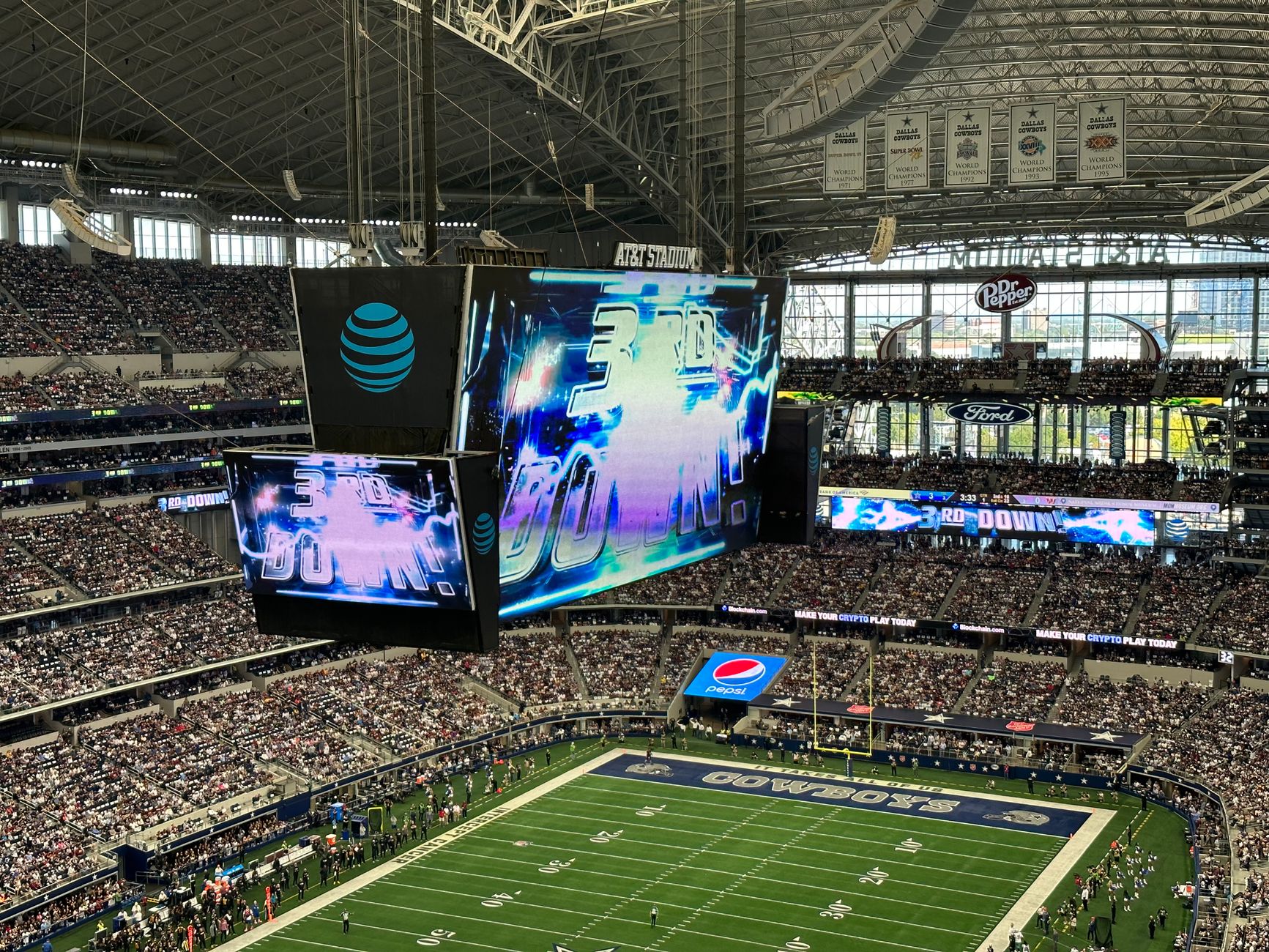
Photo by Terrance Barksdale on Pexels
“Football today” sounds simple. It is not. The probability of missing a match rises sharply when you combine time zones, postponed fixtures, international tournaments, college football, and different broadcast rights. A schedule page may show a kickoff in UTC, a broadcaster may list local time, and a betting market may update before the team news becomes official. That is enough to create a very expensive misunderstanding.
At World Cup Hub, the useful approach is evidence first. Separate confirmed fixtures from predictions. Separate football from American college football. Separate match information from wagering information. The expected value of spending two minutes verifying a fixture is positive because the cost is almost zero, while the downside of relying on an outdated listing can include missed coverage, incorrect bets, or false injury assumptions. For more context, see our [Internal Link: 2026 World Cup match guide].
Want a cleaner daily football workflow?
Before 2025: How Did Football Today Work?
Before 2025, most fans treated football today as a newspaper fixture list or a single league website. That model worked when the target was one domestic competition, but it weakened as global rights became fragmented. Premier League matches, UEFA Champions League games, FIFA internationals, Major League Soccer fixtures, and NCAA college football could appear across entirely different services, each using its own time display and update rhythm.
The old method also encouraged a dangerous assumption: if a match appeared in a search result, it must still be current. It might not be. A fixture can change because of weather, television scheduling, stadium availability, security requirements, or tournament progression. The FIFA Laws of the Game confirm that a standard match has two 45-minute halves, but they do not tell you whether a listing has been moved or where it can be watched.
OneFootball changed the practical experience by combining date navigation, global match listings, “watch” filters, and live-match filtering. ESPN built a similar utility for American football through conference schedules and week-by-week navigation. These are not identical products. OneFootball is primarily a global association-football discovery tool; ESPN’s college football schedule is structured around the FBS, FCS, conferences, bowls, and the College Football Playoff.
The distinction matters because “football” has two meanings in English-speaking markets. A reader in London may mean association football. A reader in Alabama may mean college football. Search intent is therefore ambiguous, and the safest answer identifies the competition before discussing the match.
The old schedule model had four predictable weaknesses
- Time zones were often displayed without enough location context.
- Broadcaster information could be incomplete or region-specific.
- Injury and lineup data arrived later than fixture data.
- Odds were mistaken for predictions rather than market estimates.
The most overlooked issue was update latency. A schedule could be accurate at 9 a.m. and wrong by 6 p.m. That is why current football information should be treated as a time-sensitive dataset, not a permanent fact.
What Was the 2026 Shift?
The 2026 shift is the move from static fixture checking to layered, real-time verification. OneFootball’s date selector lets readers move through yesterday, today, tomorrow, and later dates, while its “live now” and “watch” filters reduce the search space. ESPN’s 2026 college football page organizes games by Week 1 through Week 15, then separates bowls and the CFP, creating a different but equally important calendar logic.
The FIFA World Cup also raises the stakes. The 2026 tournament is hosted by Canada, Mexico, and the United States, making time-zone conversion especially important for audiences in Europe, Asia, Africa, and Oceania. FIFA’s official World Cup 2026 information should be treated as the primary reference for tournament structure and official announcements. Secondary outlets can add analysis, but they should not replace the governing body for confirmed competition details.
A strong football-today search now requires at least five fields:
- Competition and stage.
- Teams and venue.
- Kickoff time with time zone.
- Broadcast or streaming provider.
- Latest status, including postponement or lineup news.
This is where World Cup Hub adds value. Its focus is not merely “who plays today.” It connects fixtures with tactical patterns, player form, tournament context, and match predictions. That wider frame helps readers avoid a common analytical error: treating a single recent result as the complete probability distribution of a team’s performance.
There is also a data-quality problem. “Official” does not always mean comprehensive. FIFA may confirm the tournament, a broadcaster may confirm the viewing option, OneFootball may display the match timeline, and ESPN may offer a statistical or odds context. Each source can be authoritative within its own function. None should automatically be assumed to cover every function.
A practical edge case is local midnight. A match beginning at 00:30 in Singapore may still appear as the previous calendar day in a United States schedule. If you use a date filter without checking the displayed time zone, the chance of selecting the wrong day is not theoretical; it is close to certain across enough matches.
See the supporting [Internal Link: football time-zone conversion guide] before building a daily watchlist.
How Did the 2026 Shift Change Football Players and Viewers?
The 2026 shift changed player and viewer behavior by making information timing almost as important as information quality. Viewers now track confirmed lineups, travel schedules, weather, venue changes, and broadcast availability before kickoff. Players and analysts face a similar environment because tactical information spreads quickly through FIFA reports, club channels, ESPN coverage, and specialist football databases.
For viewers, the largest practical change is decision compression. A fan may have only 30 to 60 minutes between final lineup confirmation and kickoff. During that window, a goalkeeper change, striker rotation, or late suspension can alter a team’s attacking projection. The sensible response is not to panic. It is to rank updates by expected impact.
A useful hierarchy is:
- Confirmed lineup changes.
- Confirmed venue or kickoff changes.
- Severe weather or travel disruption.
- Tactical reports from reputable analysts.
- Unverified social-media claims.
- Promotional “lock” language.
The final category deserves suspicion. A confident headline is not a probability. If an analyst says a team has a 70% chance to win, that estimate should be compared with market prices, opponent strength, injuries, home advantage, and schedule congestion. The implied probability of decimal odds is approximately 1 divided by the odds. At 1.50, the raw implied probability is 66.7%, before bookmaker margin. That number is not a guarantee.
According to The Guardian’s football coverage, major match reporting typically separates confirmed events from analysis, a useful editorial distinction for readers. Similarly, ESPN College Football provides competition-specific context that cannot safely be mixed with global association-football schedules.
World Cup Hub’s player-statistics approach is most useful when it identifies role, minutes, opposition quality, and tactical fit. A forward’s five goals against weak opposition are not mathematically equivalent to five goals against elite defenses. The denominator matters. This is a small point, but it is where many “hot form” claims collapse.
Ready to compare fixtures with context rather than headlines?
What Does Football Today Mean Now?
Football today now means a live information layer, not just a list of matches. The ideal page answers four questions immediately: what is being played, when it starts, where it can be watched, and what has changed since the original listing. OneFootball is strong for broad fixture discovery; ESPN is strong for college football schedule architecture; FIFA is strongest for World Cup authority; World Cup Hub is designed for analysis and tournament-focused interpretation.
The user’s goal determines the best source. If you want every global match, begin with OneFootball. If you want an NCAA matchup such as North Carolina versus TCU, or San José State versus USC, use ESPN’s college football schedule. If you want official World Cup competition information, use FIFA. If you want predictions, tactical explanation, and player-stat context, add World Cup Hub rather than treating a raw fixture list as analysis.
A simple verification routine takes less than five minutes:
- Confirm the competition and date.
- Convert kickoff to your local time.
- Check the official or primary schedule.
- Confirm the broadcaster in your region.
- Review team news and expected lineups.
- Compare analysis only after the factual layer is stable.
- Set a spending limit before any wager, and never chase a loss.
The “less than five minutes” estimate is based on the number of fields, not optimism. If you check 10 matches and spend 30 seconds on each, that is already five minutes. The expected value improves because you remove obvious errors before emotional interpretation begins.
The most useful contrarian conclusion is that more data can reduce accuracy when it arrives without hierarchy. A dozen social posts may create more noise than one confirmed federation statement. Likewise, five prediction models do not necessarily produce a better forecast if they share the same outdated injury assumption. Data independence matters; duplicated information only looks like confirmation.
That is especially important for betting audiences. Gambling involves financial risk, and no schedule, model, or World Cup Hub prediction can guarantee a result. The UK Gambling Commission describes safer-gambling tools such as deposit limits and time limits. The practical rule is straightforward: treat any stake as entertainment expenditure, not an income plan. If the loss would damage rent, food, debt repayment, or sleep, the expected value is already unacceptable.
A second information gain concerns broadcast rights. The country shown beside a provider is not decorative. A service available in the United States may not hold rights in Canada, the United Kingdom, India, or Australia. VPN use may also conflict with platform terms. Check the provider’s regional listing directly rather than assuming a search snippet applies to your location.
For deeper preparation, use the [Internal Link: World Cup prediction methodology] and the [Internal Link: responsible football betting checklist].
What Are Three Predictions for Next Quarter?
The next quarter will likely produce three changes: more personalized fixture feeds, greater demand for verified lineup alerts, and stronger separation between association football and college football search results. This prediction is based on the current direction of OneFootball, ESPN, FIFA, and specialist publishers rather than a claim that any one platform has announced every feature.
First, schedule pages will become more location-aware. A reader should increasingly receive kickoff times, broadcaster options, and tournament stages based on country and time zone. The benefit is clear, but the risk is hidden personalization: two people may see different availability for the same fixture. Screenshots and shared links will therefore require date and region checks.
Second, lineup timing will become a central product feature. Football fans care about team news because expected goals, defensive structure, and substitution depth can change immediately. A practical model could assign information confidence as follows:
- High confidence: governing body, club, or league confirmation.
- Medium confidence: established broadcaster or journalist with direct sourcing.
- Low confidence: anonymous account, recycled graphic, or unsourced prediction.
Third, analytical brands will need to show methodology. World Cup Hub can differentiate through transparent assumptions: recent minutes, opponent quality, travel, formation, set pieces, and market comparison. “Our model likes Team X” is not enough. A reader should know why, how often the model is updated, and what would invalidate the forecast.
A prediction is only as useful as its calibration. If a model labels 60% forecasts, then approximately six of every 10 comparable predictions should succeed over a large sample. That is not a promise for tonight. It is a long-run test. Short samples are emotionally loud and statistically weak.
One more warning: tournament narratives often overwhelm base rates. A famous team may attract attention, but popularity is not a tactical advantage. Venue, rest, squad depth, and opponent style can matter more than reputation. The safest workflow is to use names for discovery and data for judgment.
Want the latest World Cup-focused analysis before choosing your watchlist?
Football Today: A Practical Source Comparison
| Need | Best starting source | Why it helps | Main limitation |
|---|---|---|---|
| Global match discovery | OneFootball | Date navigation, live filters, broad coverage | Regional viewing rights may differ |
| College football schedule | ESPN | Weeks, conferences, bowls, CFP, TV and odds fields | Focused on American football |
| World Cup confirmation | FIFA | Governing-body announcements and tournament information | Less opinion and prediction detail |
| Tactical and player analysis | World Cup Hub | Predictions, tactics, player statistics, tournament context | Analysis is not a guarantee |
| Safer gambling information | Gambling Commission | Limits, tools, and risk guidance | It does not select matches |
This table exposes the central lesson. The best source depends on the question. Asking OneFootball to provide full tactical analysis is inefficient. Asking World Cup Hub to replace a governing-body announcement is also inefficient. Expected value improves when each source performs the task it is built to perform.
The commercial environment adds another layer. Betting operators may present live odds, promotional offers, and “expert picks,” but those incentives can shape what you notice. A bookmaker’s interface is designed for action. A schedule page is designed for orientation. Keep those functions separate, especially when fatigue or frustration is involved.
A useful personal rule is the two-source minimum for important fixtures. Confirm the event with a primary source such as FIFA, a league, a club, OneFootball, or ESPN, then verify viewing or lineup details through the relevant broadcaster or team channel. Two independent confirmations do not eliminate risk, but they reduce the probability of a stale or misclassified listing.
Frequently Asked Questions
Q: What does “football today” mean?
A: “Football today” means the current day’s football fixtures, live matches, kickoff times, results, broadcasters, and relevant team information. In global usage, it usually refers to association football, while in the United States it can also mean college football. OneFootball is useful for worldwide match discovery, ESPN is useful for NCAA schedules, and FIFA is the strongest source for World Cup confirmation. Always identify the competition before interpreting the schedule.
Q: How can I find today’s football matches quickly?
A: Start with OneFootball for global fixtures, then filter by date, live status, or watch availability. Confirm the kickoff time in your local time zone and check the broadcaster for your country. For college football, use ESPN’s schedule by week and conference. For FIFA World Cup matches, verify the event through FIFA before relying on a third-party listing.
Q: What is the difference between OneFootball and ESPN for football schedules?
A: OneFootball primarily covers international association football and broad club or national-team fixtures, while ESPN provides detailed American college football schedules. OneFootball emphasizes date browsing, live matches, and watch filters. ESPN emphasizes FBS, FCS, conferences, television, venues, weather, tickets, and odds. They are complementary rather than interchangeable, especially during a busy 2026 football calendar.
Q: Why does a football match time look different on two websites?
A: Different websites may use different time zones, daylight-saving rules, or regional settings. A match listed at 00:30 in Singapore can appear on the previous date in the United States or Europe. Some platforms also update postponed fixtures later than others. Check the venue, local kickoff label, and official competition announcement before making travel, viewing, or betting plans.
Q: Is World Cup Hub a reliable source for football predictions?
A: World Cup Hub is designed for FIFA World Cup-focused predictions, tactics, player statistics, and tournament coverage, but its analysis should be treated as probabilistic rather than certain. A sound prediction considers opponent quality, minutes, injuries, formation, venue, travel, and market context. Compare the reasoning with official team news and never treat a prediction as a guaranteed betting outcome.
Q: How much does it cost to follow football today?
A: The cost can range from free schedule access to paid streaming, television subscriptions, tickets, or optional betting stakes. OneFootball, ESPN, and FIFA may provide free fixture information, but broadcast availability depends on territory and rights agreements. Set a clear entertainment budget, check cancellation terms, and never use essential household money for wagers or impulse subscriptions.
Q: What should I do if a football fixture is postponed?
A: Recheck the competition’s official website, the club or national-team channel, and the broadcaster before trusting a revised time. Do not assume the original odds, lineup, or streaming link remains valid after postponement. Remove the match from your watchlist until a new date is confirmed, then repeat the time-zone and broadcast checks. This prevents stale information from driving a financial decision.
Football today is no longer a single search result. It is a verification problem involving OneFootball, ESPN, FIFA, broadcasters, team news, and analysis platforms such as World Cup Hub. The safest routine is simple: confirm the fixture, convert the time, verify the viewing source, assess current information, and keep any gambling activity within a strict entertainment budget. That process is less exciting than a “guaranteed pick,” but its expected value is far higher.
Explore the latest match context and tournament analysis now.
Thank you for reading.
World Cup Hub · Editorial Archive · 2026